A varied diet is the foundation of healthy eating. Yet the latest figures from Sciensano’s Belgian Food Consumption Survey (2022–2023) show that many Belgians do not get the recommended amounts of several vitamins and minerals from their diet.
Vitamin D
± 5 µg
average daily intake from food, compared with the recommended 15 µg
Calcium
67%
do not reach the recommended intake from food
Folate (vitamin B9)
70%
do not reach the recommended intake from food
Intake from food, excluding supplements. A low intake is not the same as a diagnosed deficiency.
What do we actually eat?
A healthy, varied diet provides the vitamins and minerals you need. However, few adults eat according to the recommendations: only 7% eat enough vegetables (300 g/day), 10% enough fruit (250 g/day), 11% enough dairy (250–500 ml/day) and barely 1% enough wholegrain products (125 g/day). Compared with the previous survey (2014–2015), intake from food of calcium, vitamin A, vitamin B2 and vitamin C, among others, has fallen. Among people aged 3 to 64, the use of food supplements rose from 30% in 2014–2015 to 51% in 2022–2023.
Vitamin D stands out. The recommended amount is 15 micrograms per day. Your body makes vitamin D mainly when exposed to sunlight; you also get some from food, such as oily fish and eggs. On average, we get only about 5 micrograms a day from food, well below the recommended amount. In autumn and winter, your skin makes hardly any vitamin D in Belgium, so that is when it deserves extra attention.
Who is most at risk? Women, adolescents and people with a lower level of education are the most likely to fall short of the recommended intake. For example, 77% of women do not get the recommended amount of folate from food, 86% of adolescents do not reach the recommended amount of calcium, and 43% of adolescent girls get too little iron. The Netherlands, where the same method was used, shows a similar picture.
What can you do yourself? 3 practical tips
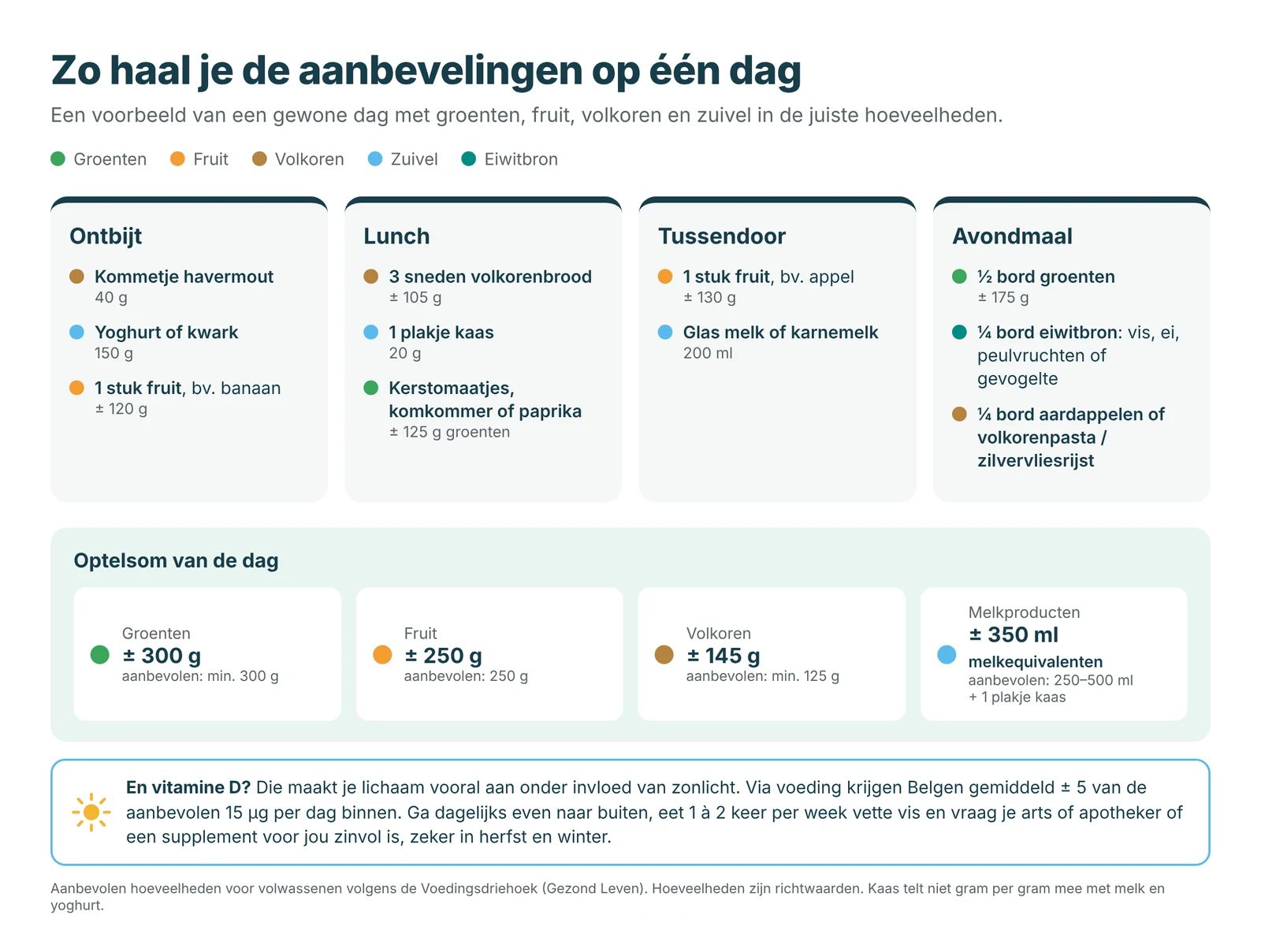
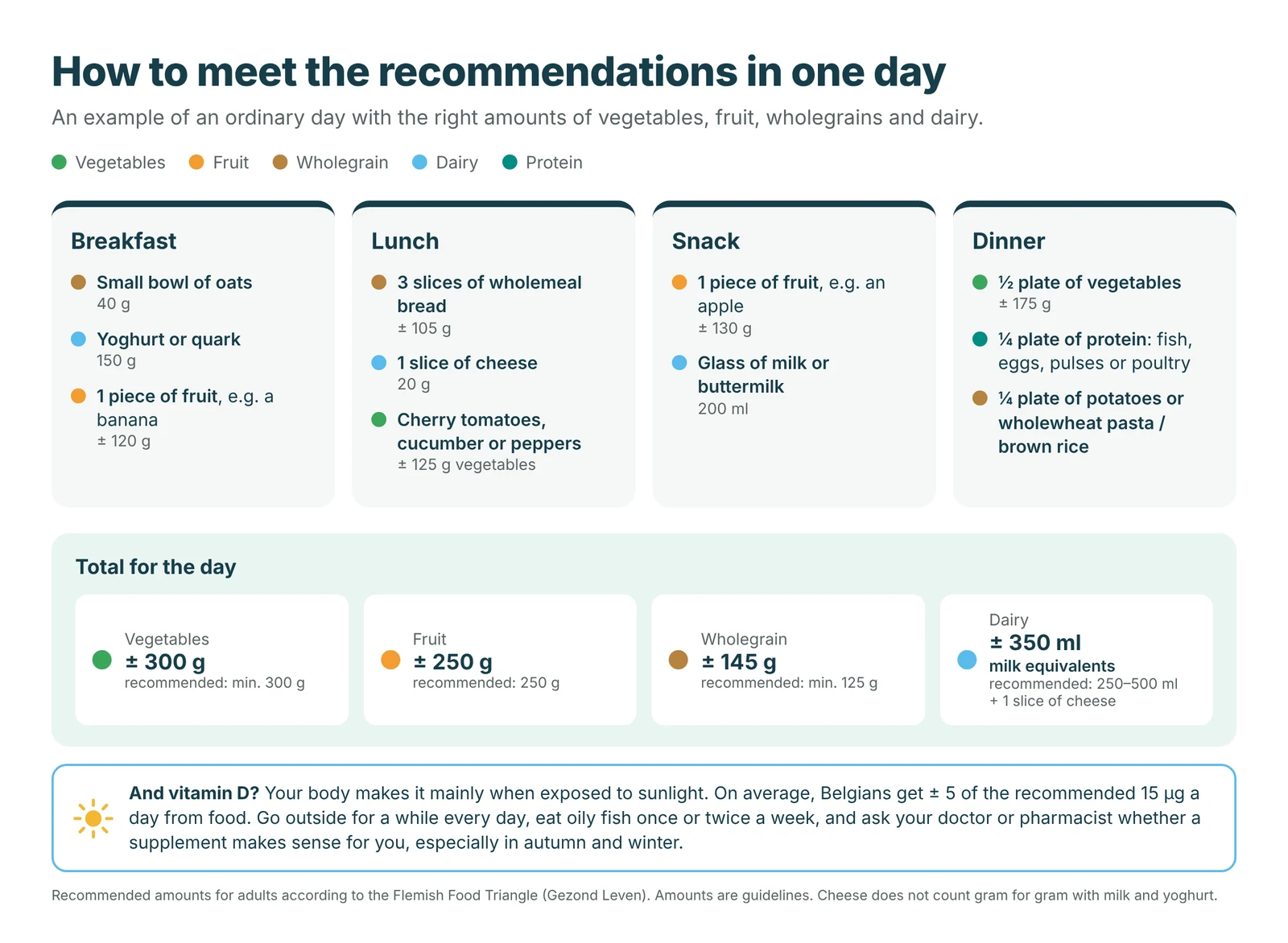
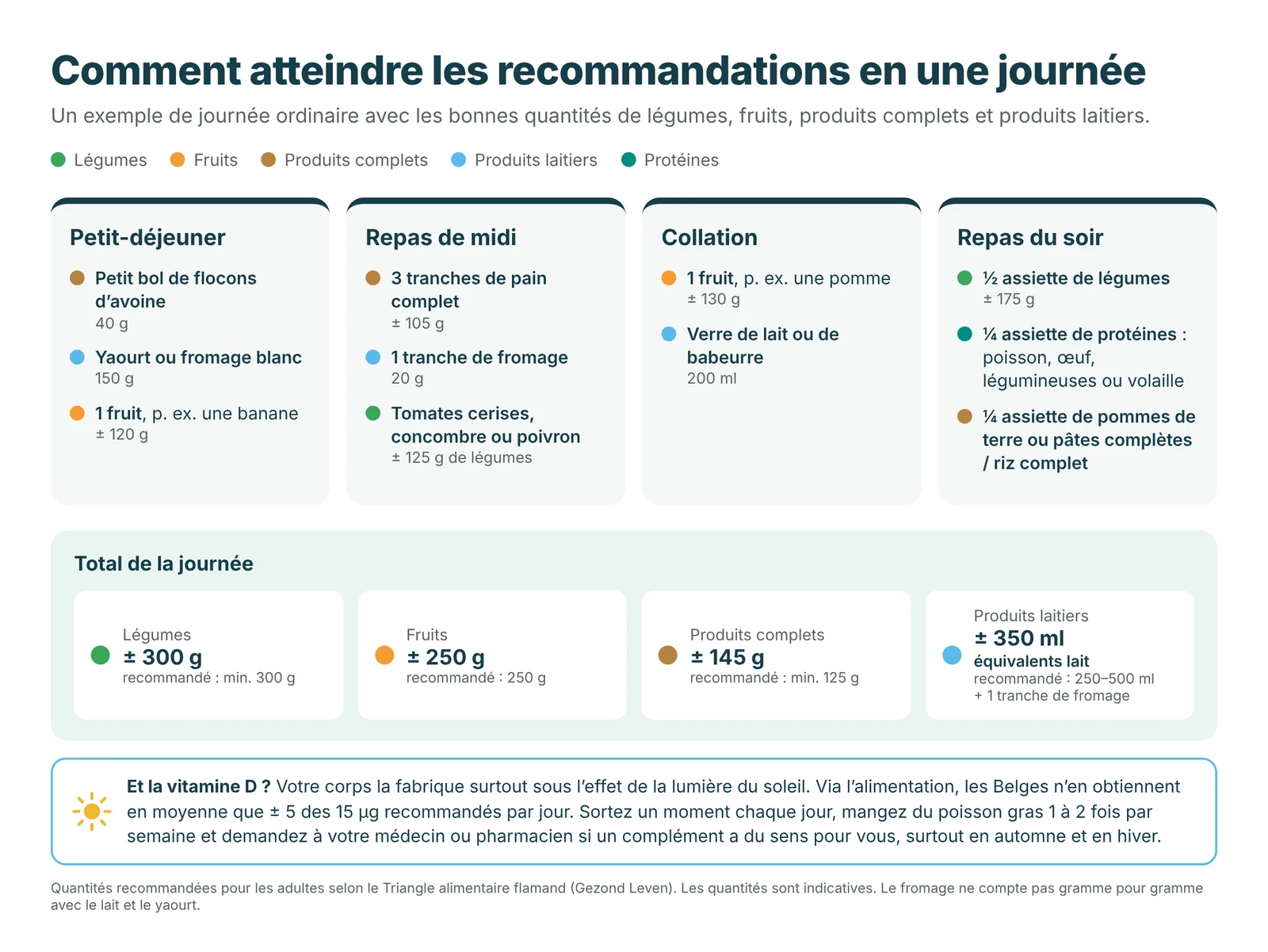
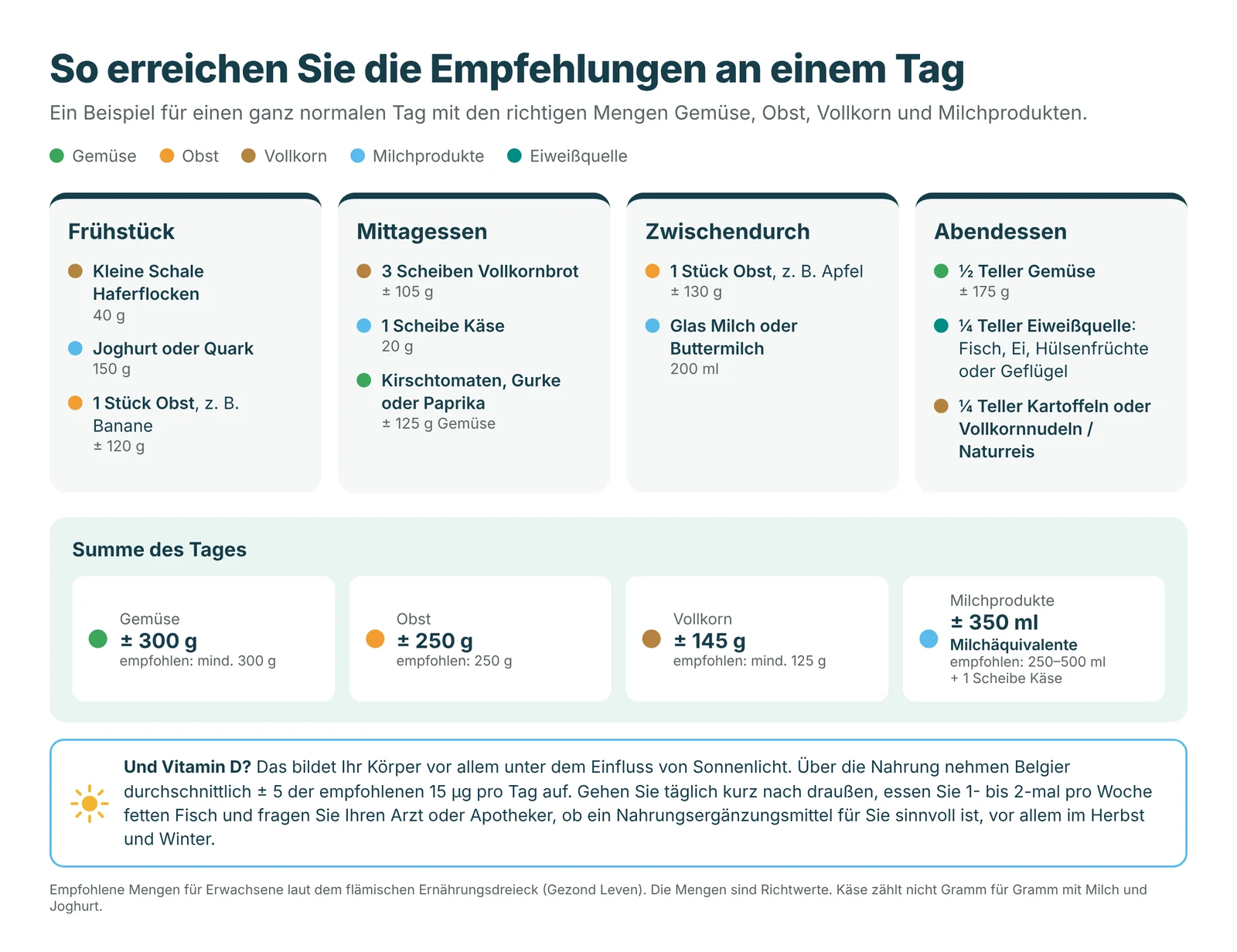
1) Eat a varied diet every day with enough vegetables, fruit, dairy and wholegrain products. Aim for the recommended amounts:
Build your plate
- ½ plate: vegetables
- ¼ plate: wholegrain cereal product or potatoes
- ¼ plate: a source of protein, such as fish, eggs, pulses or poultry
Recommended amounts per day
- Vegetables (at least 300 g): eat vegetables at lunch and at dinner. Lunch: 5 to 10 cherry tomatoes, cucumber or peppers (100–150 g). Vegetable soup counts too, but only for the vegetables it contains. Dinner: half a plate of vegetables (150–200 g).
- Fruit (250 g): 2 pieces of fruit a day.
- Wholegrain products (at least 125 g): e.g. 3 slices of wholemeal bread (± 105 g) and a small bowl of oats (40 g), or 2 slices of wholemeal bread and 80 g of wholewheat pasta or brown rice (dry weight).
- Dairy (250–500 ml): e.g. a pot of yoghurt or quark (150 g) and a glass of milk or buttermilk (200 ml). Cheese (1 or 2 slices) can be added, but does not count gram for gram.
2) Use supplements to complement a healthy diet, not to replace it.
3) Ask your doctor or pharmacist which supplements make sense for you, for example vitamin D in the winter months or folic acid if you are planning a pregnancy.
Take-home message
A healthy, varied diet remains the foundation. The figures do show that most Belgians do not eat according to the recommendations and therefore fall short of the recommended intake for several vitamins and minerals, especially women, adolescents and people with a lower level of education. The gap is largest for vitamin D. A supplement can then be a useful addition. Discuss with your doctor or pharmacist what suits you, and do not exceed the recommended daily dose. Food supplements are not a substitute for a varied diet and a healthy lifestyle.
Sources
Sciensano, Food Consumption Survey 2022–2023. BE-SUP Report 5, Insights from the Sciensano National Food Consumption Survey (2026). BE-SUP, “Vitamin and mineral deficiencies”. Gezond Leven, Food Triangle (Voedingsdriehoek).